
UAI 2026 Workshop

The 9th Workshop on Tractable Probabilistic Modeling

From Tensor Networks to Causality and Beyond

A workshop at UAI 2026 on tractable probabilistic modeling, highlighting recent connections to tensor factorizations, causality, and trustworthy AI.

Canal view in Amsterdam

About

Workshop overview

TPM 2026 focuses on tractable probabilistic models for trustworthy AI, with special attention to tensor networks and causality.

Safety-critical AI applications require causal reasoning under uncertainty. Diagnoses in healthcare, for instance, must not rely on spurious correlations brittle to distributional shifts. Tractable probabilistic modeling (TPM) addresses these needs by providing reliable, efficient inference with guarantees for certified fairness, robustness, and privacy. TPMs are studied across logical reasoning, tensor factorizations, and causal inference, encompassing models with tractable likelihoods (e.g., normalizing flows), tractable marginals (e.g., bounded-treewidth models), and complex tractable reasoning (e.g., probabilistic circuits and tensor networks).

This new edition of TPM builds on the expanding reach of tractable probabilistic models, highlighting recent connections to tensor factorizations and causality and fostering an interchange of ideas between these communities. We welcome contributions on all the TPM spectrum and hope to bring many communities together to help them advance their respective research fields.

Information

Important dates

All deadlines are end-of-day AoE and will be updated here if details change.

Date Deadline
April 9, 2026 AoE Submission opening
June 17 (extended), 2026 AoE Submission deadline
July 3, 2026 AoE Notification of acceptance

Invited speakers

Meet our invited speakers

Five perspectives spanning tensor networks, neurosymbolic AI and probabilistic programming languages.

Steven Holtzen

Assistant Professor at Northeastern University, US

Invited talk

From TPMs to Programming Languages and Back Again

Tractable probabilistic models (TPMs) have slowly but steadily become a standard method for probabilistic reasoning in the programming languages community, with several papers published this year in top-tier venues that make use of TPMs for performing probabilistic reasoning. I think this is the beginning of exciting cross-pollination of these communities. My goal in this talk is to (1) explain to you why the programming languages community cares about and uses probability; (2) show you why TPMs are steadily becoming a standard tool within that community for solving their problems; and (3) point towards future opportunities for collaboration between communities. Along the way, I will give you a flavor of how the programming languages person thinks.

Biography

Steven Holtzen is an assistant professor and programming languages researcher at Northeastern University. His research focuses on designing tools and foundations for reasoning about programs with probabilistic behavior. He received his PhD in computer science from the University of California, Los Angeles in 2021. His work has been recognized by two ACM SIGPLAN distinguished paper awards and an NSF CAREER award.


Chao Li

Research Scientist at RIKEN-AIP, Japan

Invited talk

On Approximation Complexity of Matrix Product Operator Born Machines

Matrix Product Operator Born Machines (MPO-BMs) are tensor-network-based probabilistic generative models with favorable computational properties. In this talk, I will present recent results on their approximation complexity, including NP-hardness results for KL approximation in the worst case, as well as positive results showing efficient approximation and learning guarantees for structured probability distributions satisfying locality and spectral-gap conditions. I will conclude by discussing implications for tensor-network generative modeling and AI for Science.

Biography

Chao Li is an indefinite-term Research Scientist at RIKEN-AIP, Japan. His research lies at the intersection of tensor networks, AI for Science, and Quantum AI, with a focus on tractable generative modeling and theoretical foundations of machine learning. He has published multiple papers at top-tier international conferences, including ICML, NeurIPS, ICLR, CVPR, ECCV, AAAI, and AISTATS, with several selected for oral or spotlight presentations. He has served as an Area Chair, program committee member, and reviewer for major international conferences such as ICML, NeurIPS, ICLR, AAAI, and IJCAI. He has also organized workshops on low-rank representation learning at AAAI 2025 and ICML 2026, and organized and delivered the IJCAI 2025 tutorial “AI Meets Algebra: Foundations and Frontiers.”

Giuseppe Marra

Assistant Professor at KU Leuven, Belgium

Invited talk

Deep Probabilistic Logics: from statistical relational to neurosymbolic AI

This talk presents a unified formal perspective on neurosymbolic methods, which combine learning and reasoning in AI, showing how many seemingly different approaches can be understood through the lens of deep probabilistic logics. It further illustrates how this perspective can provide a foundational semantic substrate for emulating existing approaches and developing the next generation of neurosymbolic methods.

Biography

Giuseppe Marra is an Assistant Professor in the Declarative Languages and Artificial Intelligence (DTAI) research group at KU Leuven, where he co-leads the DeepLog team. His research focuses on the integration of neural computation and symbolic reasoning, with an emphasis on logical and probabilistic methods for neurosymbolic AI. He has contributed to several prototypical neurosymbolic frameworks and works on foundations and applications of neurosymbolic learning in areas such as concept-based interpretable deep models and safe reinforcement learning.

Eleonora Giunchiglia

Assistant Professor at Imperial College London, UK

Invited talk

Can Requirements Make Machine Learning Safer? From constrained prediction to structured generation

As machine learning systems move from narrow prediction tasks to generative and decision-making settings, their ability to satisfy domain requirements is becoming increasingly important. Yet deep neural networks can still produce outputs that violate even simple logical, structural, or regulatory constraints. This talk argues that requirements should be treated as first-class citizens in machine learning: not only as criteria for evaluating a model after deployment, but as objects that can shape what models learn, generate, and optimize for from the outset. I will show how logical requirements can define safe output spaces and be compiled into neural architectures, enabling predictions and generations that are compliant by design. Through examples in autonomous driving, tabular data generation, and neurosymbolic reasoning, the talk will illustrate how requirements can make learning systems safer, more data-efficient, and better aligned with the structure of the problems they are meant to solve.

Biography

Eleonora Giunchiglia is an Assistant Professor in the Department of Electrical and Electronic Engineering at Imperial College London and the Principal Investigator of the DUCK Lab, which focuses on Data, Uncertainty, Constraints and Knowledge. She completed her DPhil at the University of Oxford in 2022 and subsequently held a postdoctoral position at TU Wien before joining Imperial in 2024. Her research lies at the intersection of machine learning and formal reasoning, with a focus on neurosymbolic AI. In particular, she develops methods that integrate logical constraints, background knowledge, and formal requirements into neural models, with the goal of making AI systems safer, more reliable, and more trustworthy.

Kyle Richardson

Senior Research Scientist at the Allen Institute for AI, US

Invited talk

Tractable Language Model Programming: Themes and Prospects

Modern AI systems increasingly couple LLMs with other components and tools, raising a natural question: how can users and developers compose these elements into coherent systems that achieve their goals? In this talk, I will argue that many approaches to designing and using LLM-based systems can be recast as building high-level programs on top of LLMs. Viewing these systems as programs allows us to formally describe their structure and reason about their behavior. I will illustrate this perspective through my recent work using probabilistic programming and tractable probabilistic semantics to study model evaluation, loss design, test-time inference, and agentic workflow modeling. I will describe how reasoning with LLMs opens new applications for tractable inference and reveals practically important special cases that admit unusually simple solutions, potentially offering broader insights into tractability.

Biography

Kyle Richardson is a senior research scientist at the Allen Institute for AI (Ai2) in Seattle. His research lies at the intersection of natural language processing and machine learning, with a particular focus on core language model development and applications. Recently, he has been exploring how formal methods can help us better understand and design algorithms for language models. Before joining Ai2, he was at the University of Stuttgart, where he earned his PhD in 2018.

Workshop format

TPM 2026 will be held in a hybrid format. Presentations and talks will be delivered in person and streamed via Zoom. Accepted papers will be presented during two poster sessions.

View the program

Call for papers

We invite submissions across the TPM spectrum, including tractable reasoning, causal inference, tensor factorizations, and trustworthy AI applications.

Read the call for papers

Schedule

Workshop schedule

Friday, August 21, 2026. All times are local to Amsterdam (CEST).

Time Session
09:00 - 09:15 Welcome and Best Paper Awards
09:15 - 10:00 From TPMs to Programming Languages and Back Again (Steven Holtzen, Northeastern University)
10:00 - 10:30 Coffee break
10:30 - 11:15 Poster Session I
11:15 - 12:00 On Approximation Complexity of Matrix Product Operator Born Machines (Chao Li, RIKEN)
12:00 - 14:00 Lunch
14:00 - 14:45 Deep Probabilistic Logics: from statistical relational to neurosymbolic AI (Giuseppe Marra, KU Leuven)
14:45 - 15:30 Can Requirements Make Machine Learning Safer? From constrained prediction to structured generation (Eleonora Giunchiglia, Imperial College London)
15:30 - 16:00 Coffee break
16:00 - 16:45 Poster Session II
16:45 - 17:30 Tractable Language Model Programming: Themes and Prospects (Kyle Richardson, AI2)

Accepted papers

22 papers accepted to TPM 2026

Explore every paper, with authors, abstracts, PDFs, and OpenReview links.

Conference

UAI 2026

TPM 2026 is part of the UAI 2026 workshop day in Amsterdam.

The Conference on Uncertainty in Artificial Intelligence is one of the premier international conferences on research related to knowledge representation, learning, and reasoning in the presence of uncertainty. UAI is supported by the Association for Uncertainty in Artificial Intelligence and has been held annually since 1985.

  • Tutorials: Monday, August 17th, 2026
  • Main conference: Tuesday, August 18th to Thursday, August 20th, 2026
  • Workshops: Friday, August 21st, 2026
Visit the UAI 2026 website

Organizers

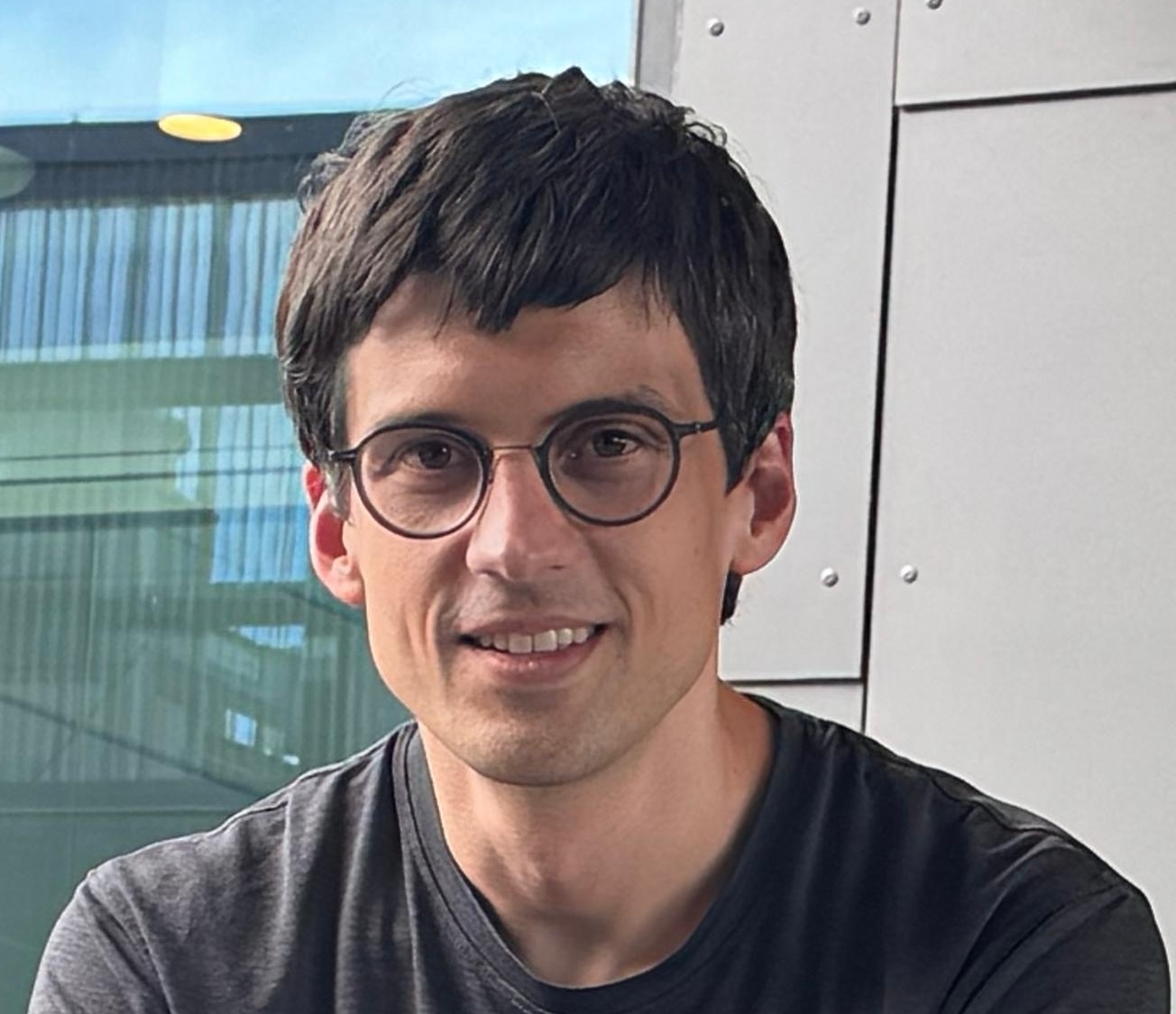
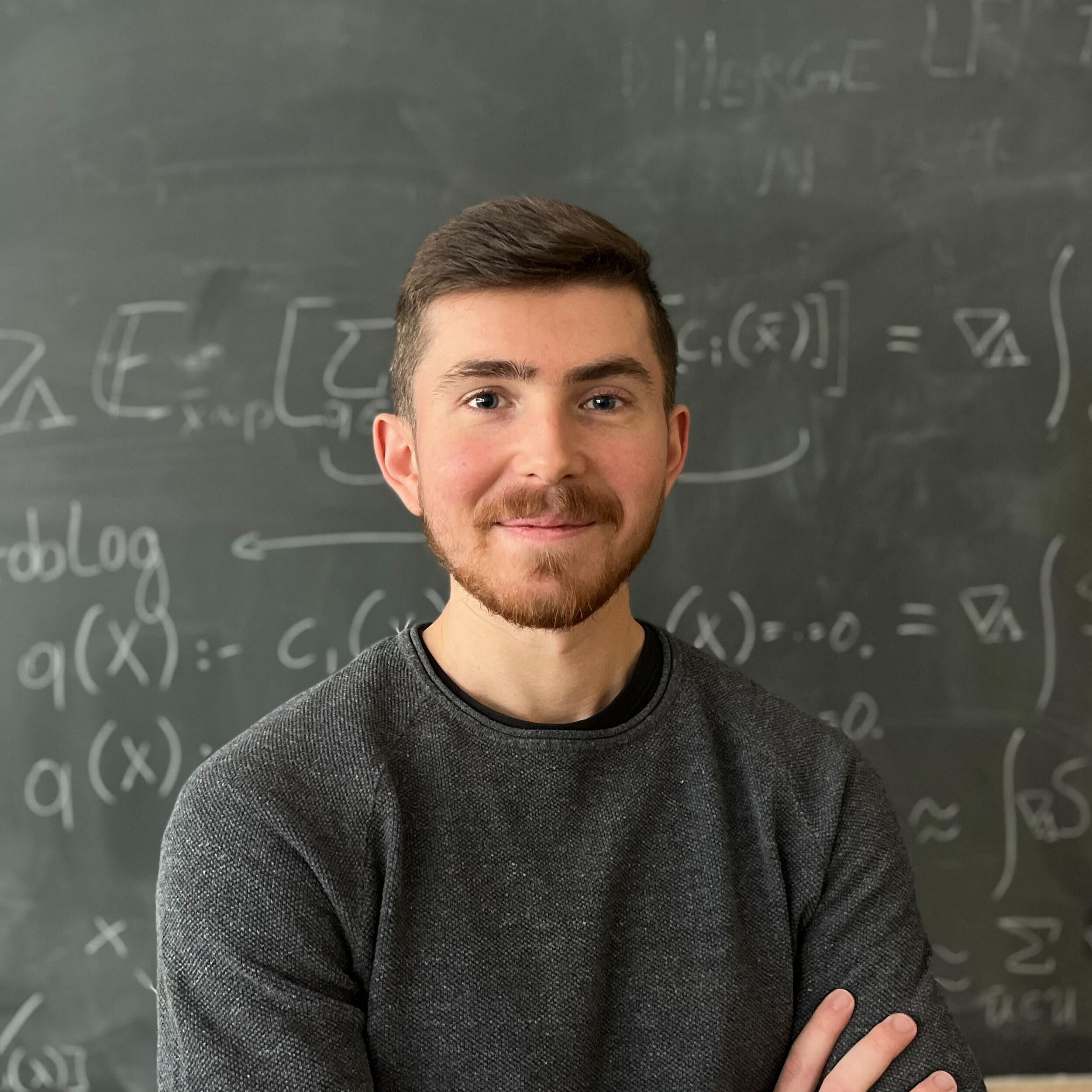
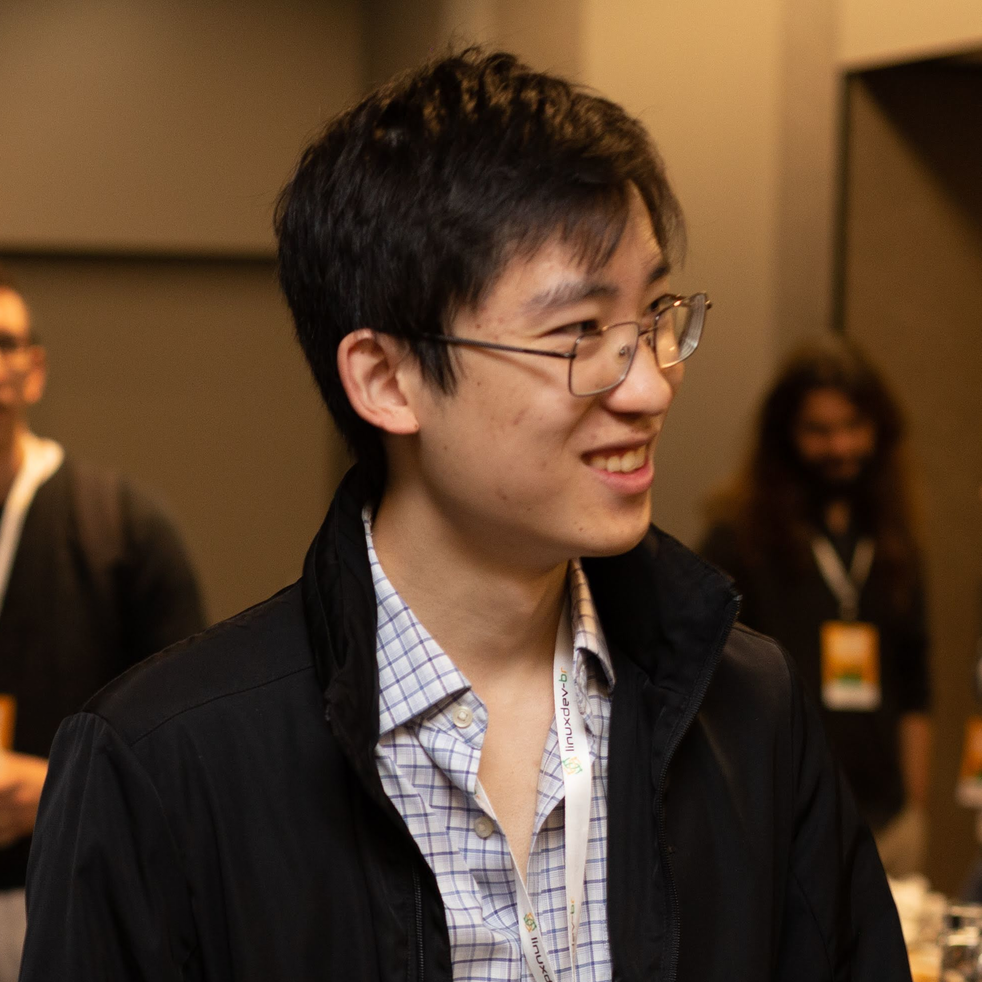
Workshop organizers

Adrián Javaloy

Adrián Javaloy

University of Edinburgh, UK

Christoph Staudt

Christoph Staudt

Friedrich Schiller University Jena, Germany

John Leland

John Leland

Arizona State University, USA

Lennert De Smet

Lennert De Smet

KU Leuven, Belgium

Lingyun Yao

Lingyun Yao

Aalto University, Finland

Poorva Garg

Poorva Garg

University of California, Los Angeles, USA

Renato Geh

Renato Geh

University of California, Los Angeles, USA

Zhe Zeng

Zhe Zeng

New York University, USA

Archive

Previous TPM workshops